Antonia Gonzalez, Gastón Sanchez, Luara Mateu and Tortell Poltrona, the author of this diary, spent two weeks in Ukraine. The aim was to continue the project that began at the end of 2025: bringing laughter and moments of play to children caught in the midst of war. Among snowfalls, icy roads, and centers devastated by violence, the team has shown that art and human connection can transform anguish into moments of happiness.
This is a brief account of their journey.
Arrival, February 23, 2026
Coincidentally, today marks exactly 33 years since I left home with Montserrat and my son Blai to travel to Sabudrija, in Yugoslavia, and begin this adventure known as Clowns Without Borders. On that trip, I was struck by people’s determination: for them, dignity was more important than life. Now, I see Ukrainians everywhere who, despite the hardships and more than 150,000 deaths, try to live as “normal” a life as possible. We are told that in the city of Krakoff there are 12,000 children hiding under the threat of drones and missiles; we will visit them.
Lviv, February 25
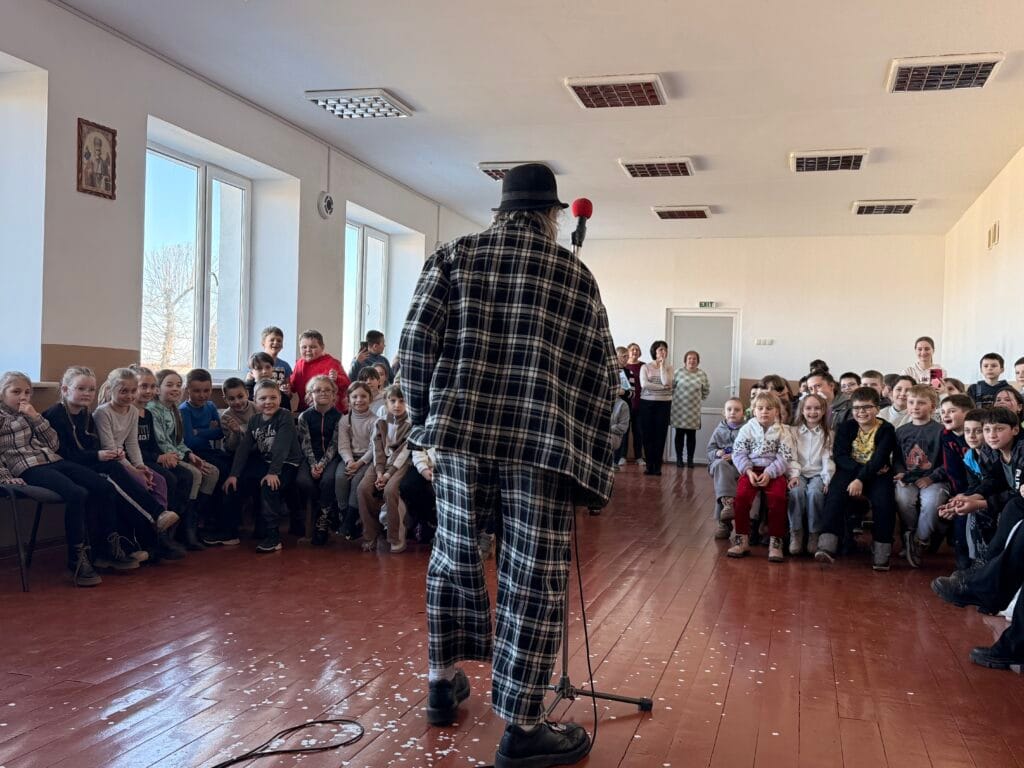
We set off in a Mercedes Bito rented by the technical team, with a driver who only speaks Ukrainian. Outside, it is snowing and traffic is slow. The day after a 25-hour journey, we perform our first show: as soon as we step out of the van, the head of the center, a red-haired woman, hugs me emotionally. We begin with Slavic punctuality and the performance flows: Luara with a little rabbit, Gastón with a ball, and Antonia and I interacting with the audience. We wrap it up with spectacular photos—the children ask us for them. The second performance, with teenagers, is just as intense; the parasympathetic response kicks in, and the team works like a perfectly tuned mechanism. I will never forget the happy faces of the children and their families.
Zhytomyr, February 26
Today marks 33 years since this adventure began, from the first performance in the refugee camps of Veli Jôze. Let’s celebrate it! Here we are, now in Ukraine—the expeditions never stop.
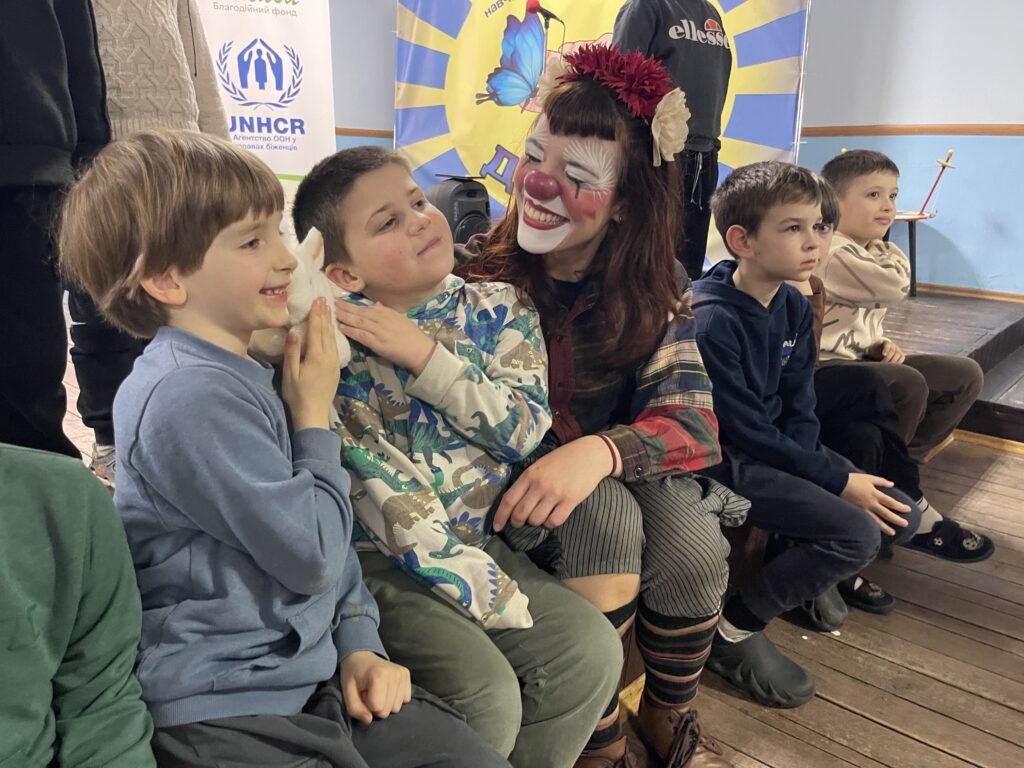
Ukrainians say this is the worst winter in 25 years: parks with 30–40 cm of snow and sidewalks piled with dirty ice. The first performance is for about 80 children in a 25×25 m hall. Children, teenagers and teachers treat us like rock’n’roll artists. In the end, we rush out because the show has been moved forward as a precaution due to supply concerns. The director of Rokada, the NGO we work with as a local partner, welcomes us with love and constant gratitude: “We don’t know how to thank you for coming to do this in a country at war—you don’t know the good you are doing.”
Vchoraishinsky, February 28
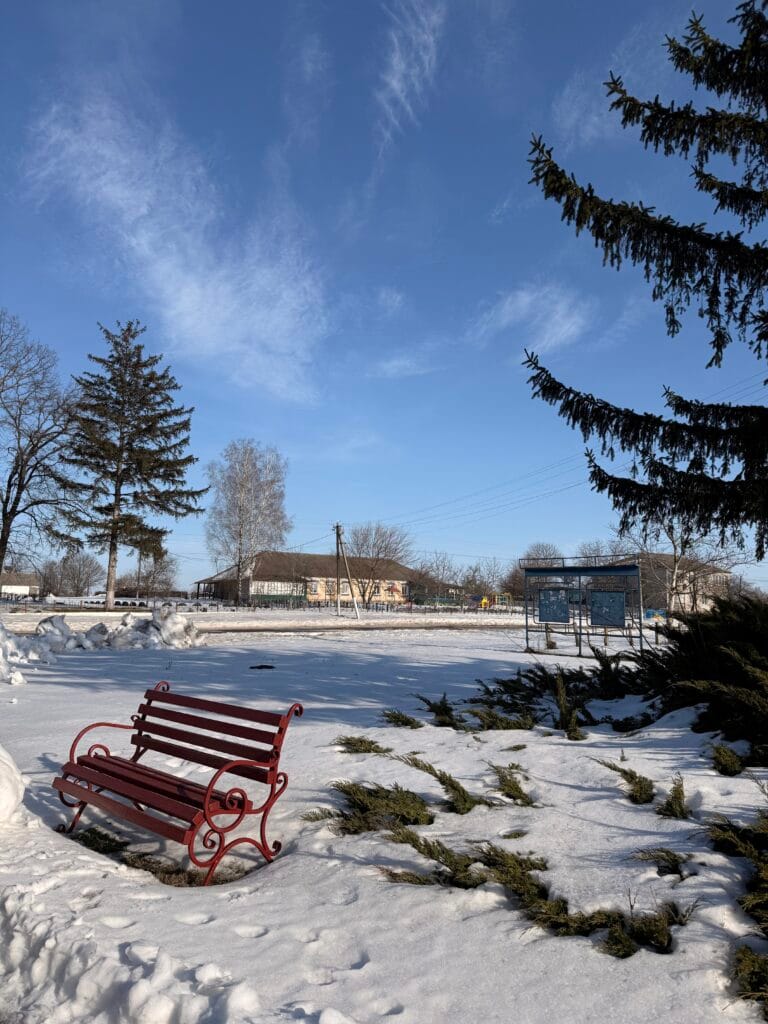
Endless white fields and a hall of 300 people at just 5 °C. They light a huge wood stove for us. At the end, Petita Lu explains in Ukrainian: “We are a group of performers from Barcelona, here to share a good time with you.” The mayor thanks us for our visit and highlights the importance of keeping life alive despite the war.
A small village welcomes us with flowers and the human warmth of the Rokada NGO team, our local partners in Ukraine. We hurry to transform the cold and do what we know best: be clowns who turn fear into laughter and connection. The mayor of Vchoraishinsky is also present and explains how, even in times of war, moments like these performances show that life goes on.
Chervonograd, Radekhiv and Lviv, March 2–3
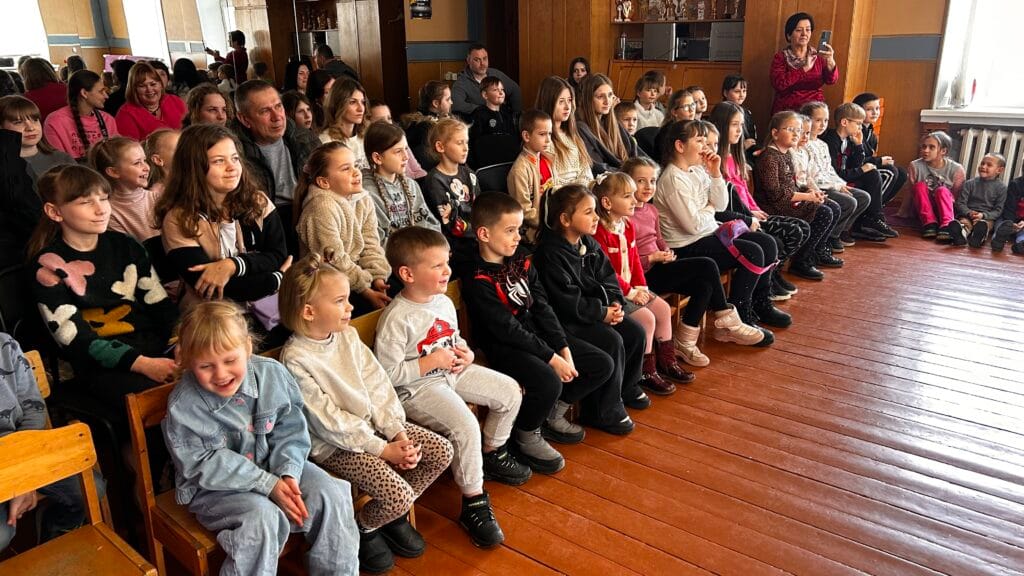
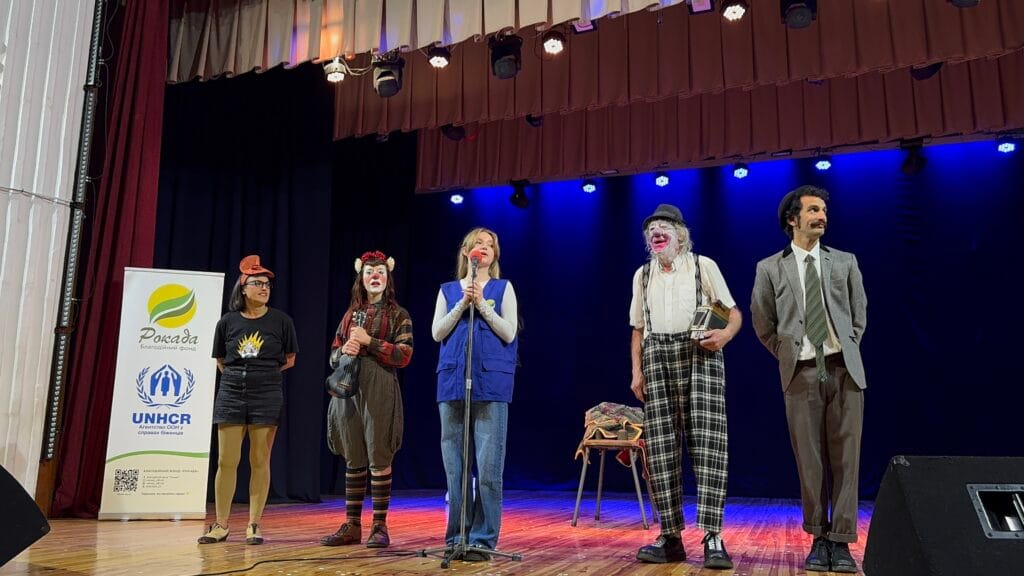
We perform and the children respond with curiosity and energy. Some twist their bodies as if conducting an orchestra; others laugh at our close-up theatre. In Lutz, more than 350 people wait for us in a large theatre; the show becomes a bridge between reality and fantasy, where children and adults can be happy, even if only for an hour.
Lviv and surroundings, March 6–7
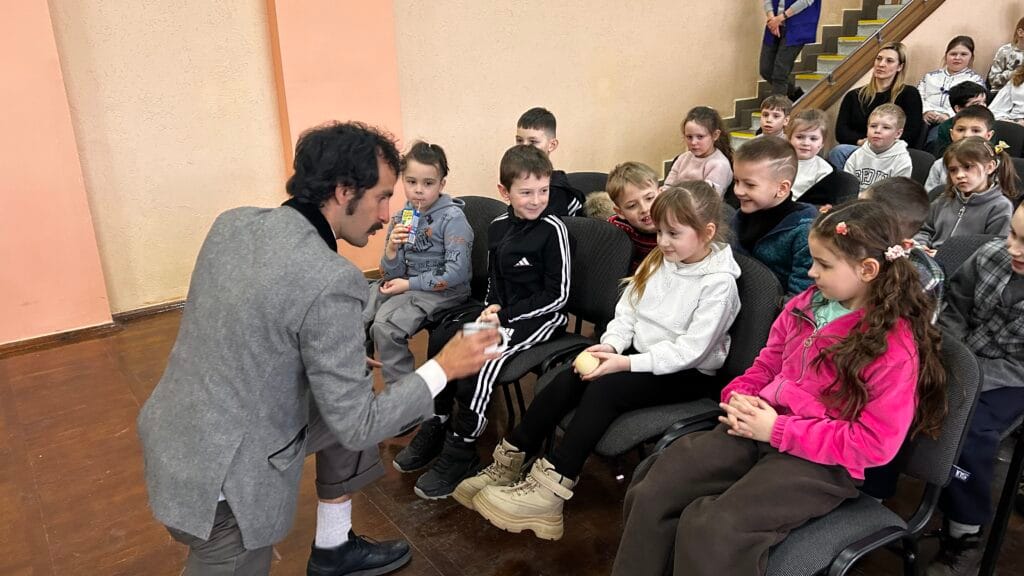
We perform shows for small groups of fewer than 30 children and others for around 350. Each performance reveals the different energy between children and teenagers. Thinking about how many have their father at home, or how many will go to bed wondering if he will still be alive tomorrow… When I think about it, our work takes on a profound meaning. Everything hangs by a thread, while the world seems caught up in absurd and violent decisions. But here, with the children, every gesture of connection feels like an act of resistance.
Return, March 8
After 18 performances and hundreds of kilometers along icy roads, we return home. The team has shown incredible professionalism and generosity. I don’t know when the war will end, but I do know one thing: the Ukrainians I have met value dignity more than life. The laughter, hugs, and moments of connection we have shared will always be a reminder that humanity and solidarity always find a way to shine, even in the midst of war.
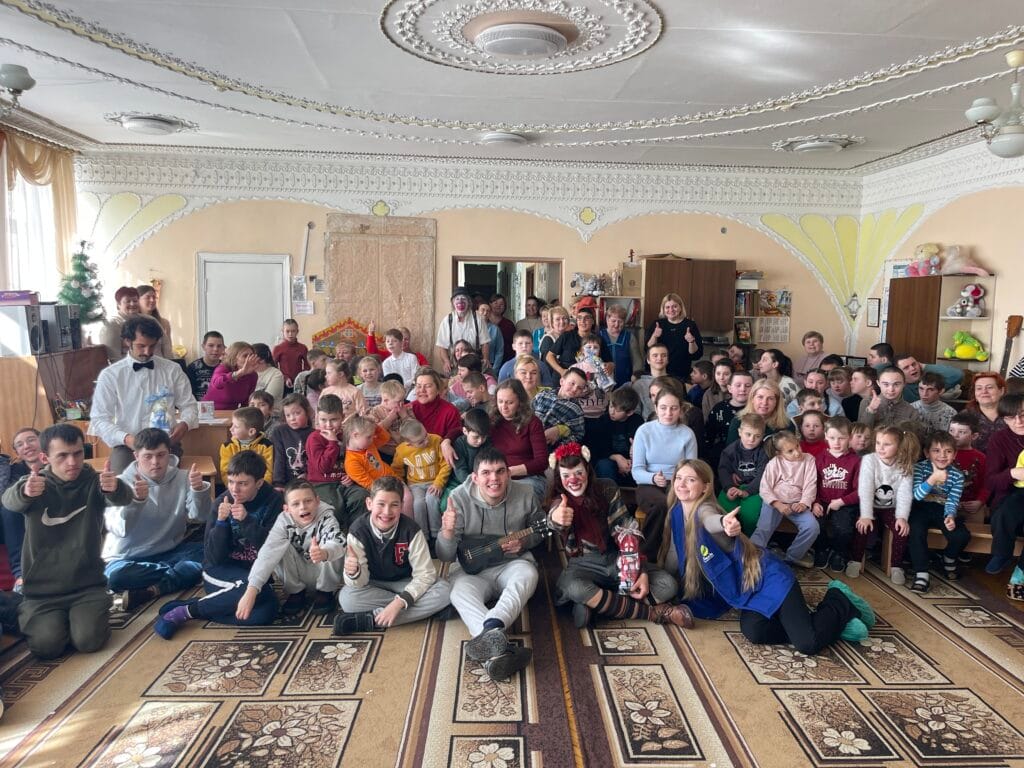
Through art and humor, at Clowns Without Borders we remind ourselves that war may try to extinguish everyday lives, but humanity and dignity always find a way to shine.
Tortell Poltrona