Chad is one of the main host countries for refugees in Central Africa. According to UNHCR, more than 1.8 million people are forcibly displaced, many of them having fled conflicts in neighboring countries such as Sudan.
The refugee camps, mainly located in the eastern part of the country, host people who have fled violence and extreme situations of forced displacement, family separation, and insecurity. Many settlements are operating at the limit of their capacity and face urgent needs related to food, healthcare, education, and protection, with children making up a large proportion of the population.
The war in Sudan, which began in April 2023, has further worsened the situation: more than 553,000 people have crossed the border into Chad, 86% of whom are women and children. Many families have fled from areas such as Darfur, in a context of extreme violence and severe risk to the civilian population.
In this context, children are one of the main priorities of humanitarian interventions: boys and girls living in refugee camps who need safe spaces, emotional support, and opportunities for play and social interaction.
Three volunteer artists from our organization, Maité Esteban, Prisca Salvadores, and Moi Queralt, took part in an expedition of approximately 10 days across different refugee camps in Chad, in coordination with UNHCR and other humanitarian actors.
During this period, performances were carried out primarily for Sudanese refugee children in a context of significant humanitarian vulnerability.
In this text, Maité Esteban shares her experience of the expedition, reflecting on the work carried out together with Prisca Salvadores and Moi Queralt as volunteer clowns.
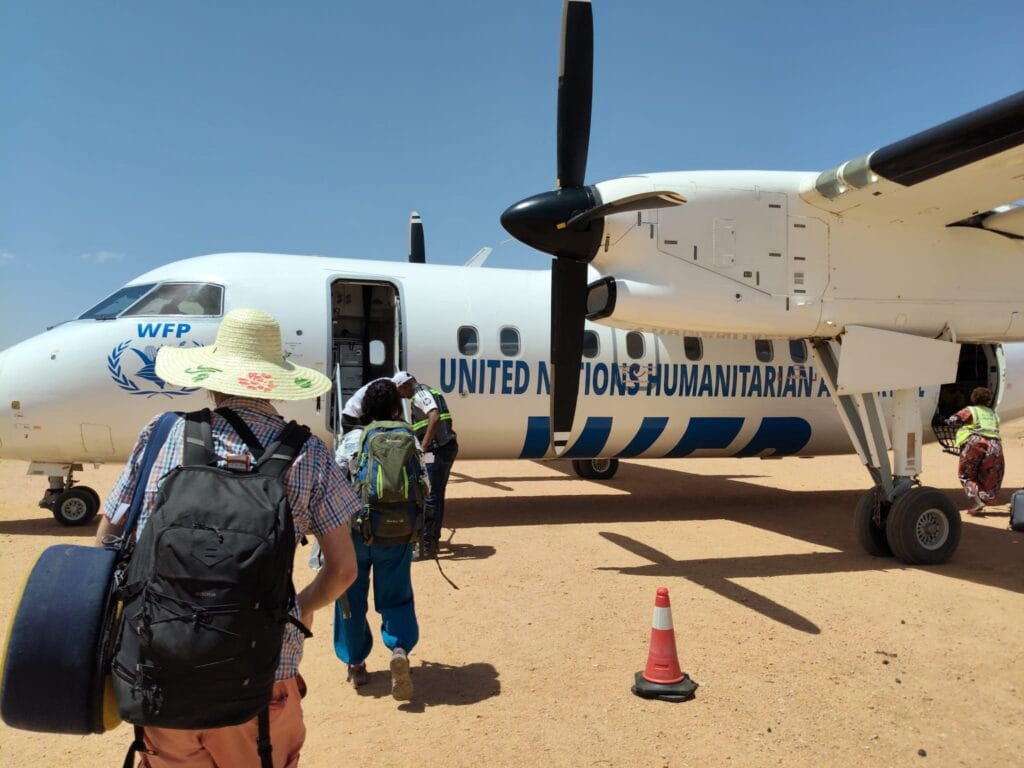
The volunteer clowns board a humanitarian flight between refugee camps.
The working days can be summarized in very specific conditions: temperatures around 45°C, travel to refugee camps in remote areas, and performances for thousands of children in different locations. In each show, the initial context was similar: open spaces, a circle of audience, and us preparing the performance. The first reactions from the audience were usually of distrust or uncertainty, especially among adults, and curiosity among children. Setup time was limited, and each performance had to be adapted to the situation. Once the show began, the dynamic gradually shifted, and interaction was built through gags and direct audience participation.
As the performances progressed, the audience shifted from an initial attitude of observation to active participation. A collective response of shared laughter and interaction emerged among people who, as UNHCR teams explained to us, were in many cases not used to laughing together in a public space. At the end of each performance, it was common for many people to approach us to say hello or try to extend the interaction before we left the camp.
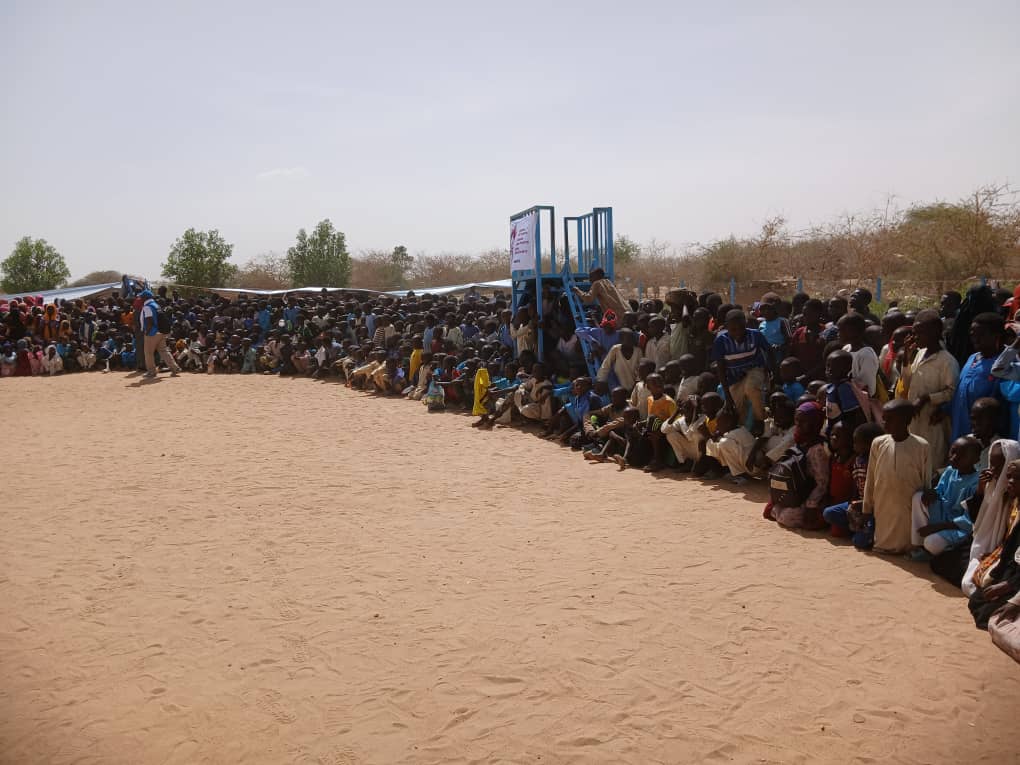
Before one of the first expeditions in the refugee camps.
There are two moments I especially remember. The first is a comment from Ernest, UNHCR’s representative in Chad, after one of the performances: “ “Today I watched the performance from behind the audience and I couldn’t believe what I was seeing… They were all laughing! All together, laughing—this had never happened before! We can provide them with water, food, medicine… But what you have achieved today is incredible. That is why you have to come back.” “The second moment happened at the end of a performance, when a volunteer participant on stage came up to me and said: ‘Thank you, I’m happy!’.”
I return from this expedition with a clear understanding of the extreme context in which these communities live and of the conditions in the camps, as well as with certainty about the role that spaces for play and encounter can have in this environment, even if only for a few minutes. What remains from these days is the reality of the camps and the children’s response to the performances in the midst of this context.
Maité Esteban
Volunteer clown with Clowns Without Borders
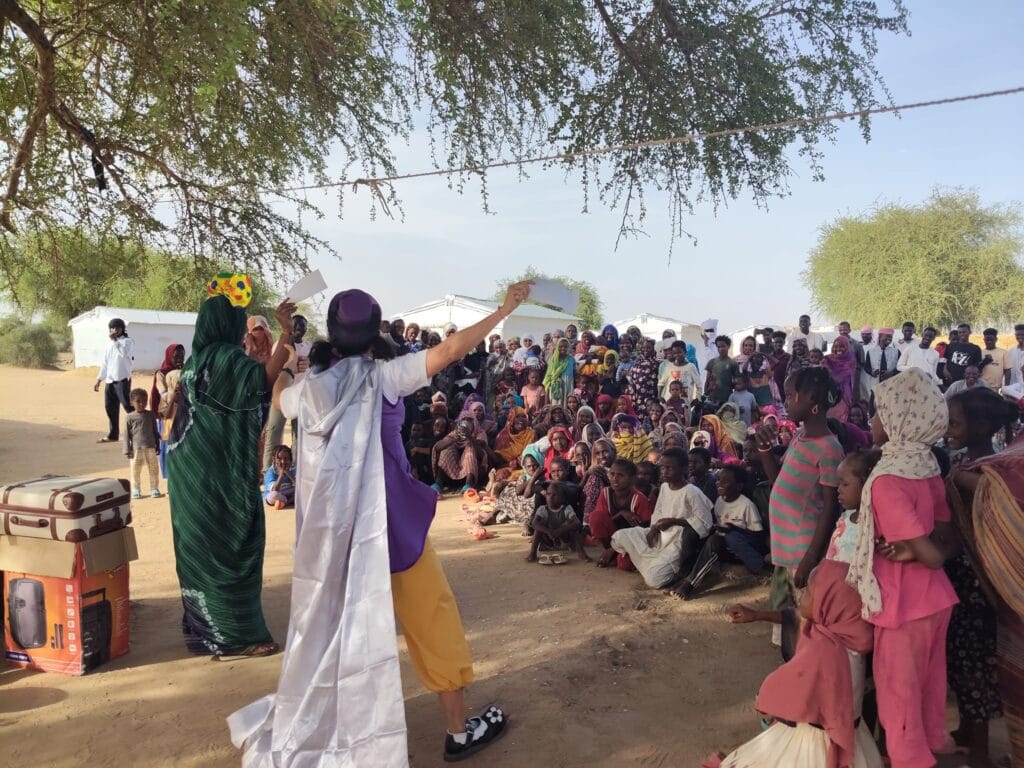
During a performance in the refugee camps.